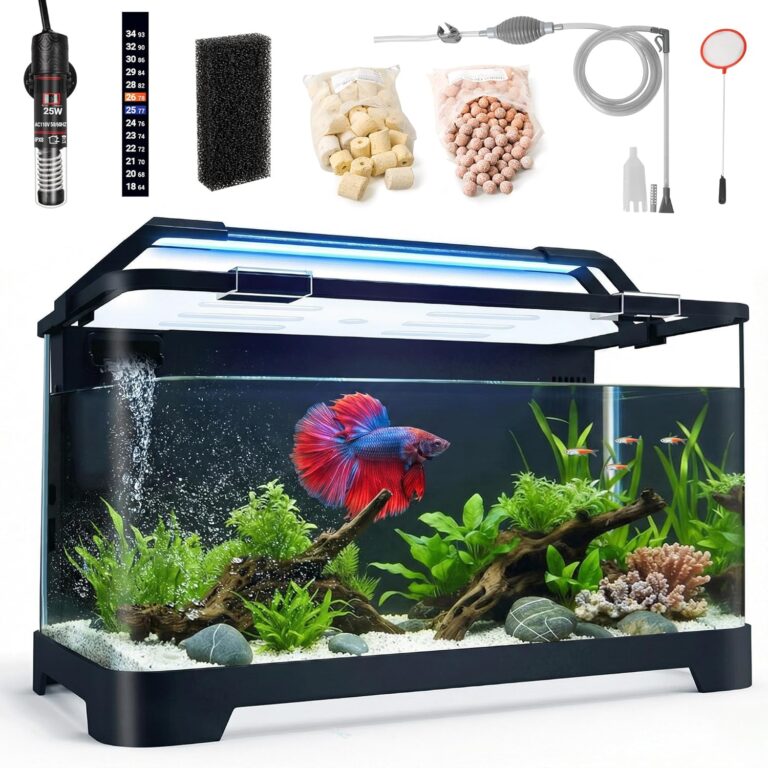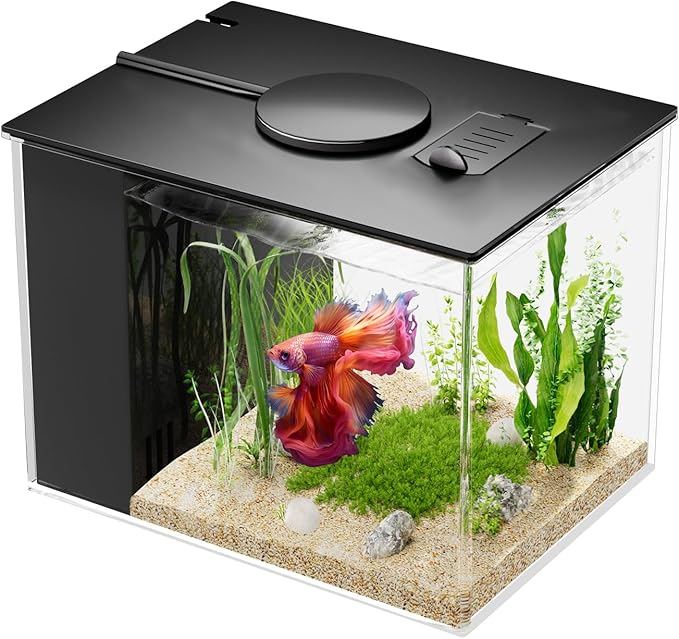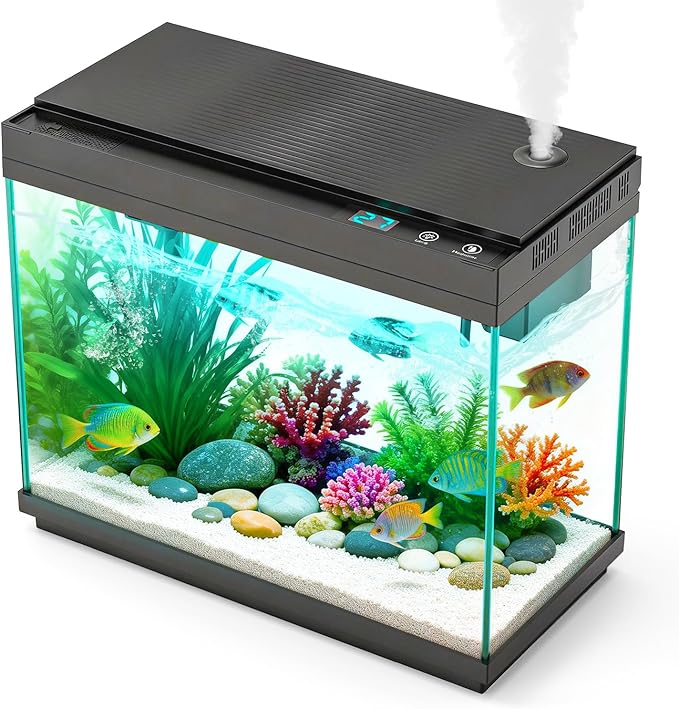
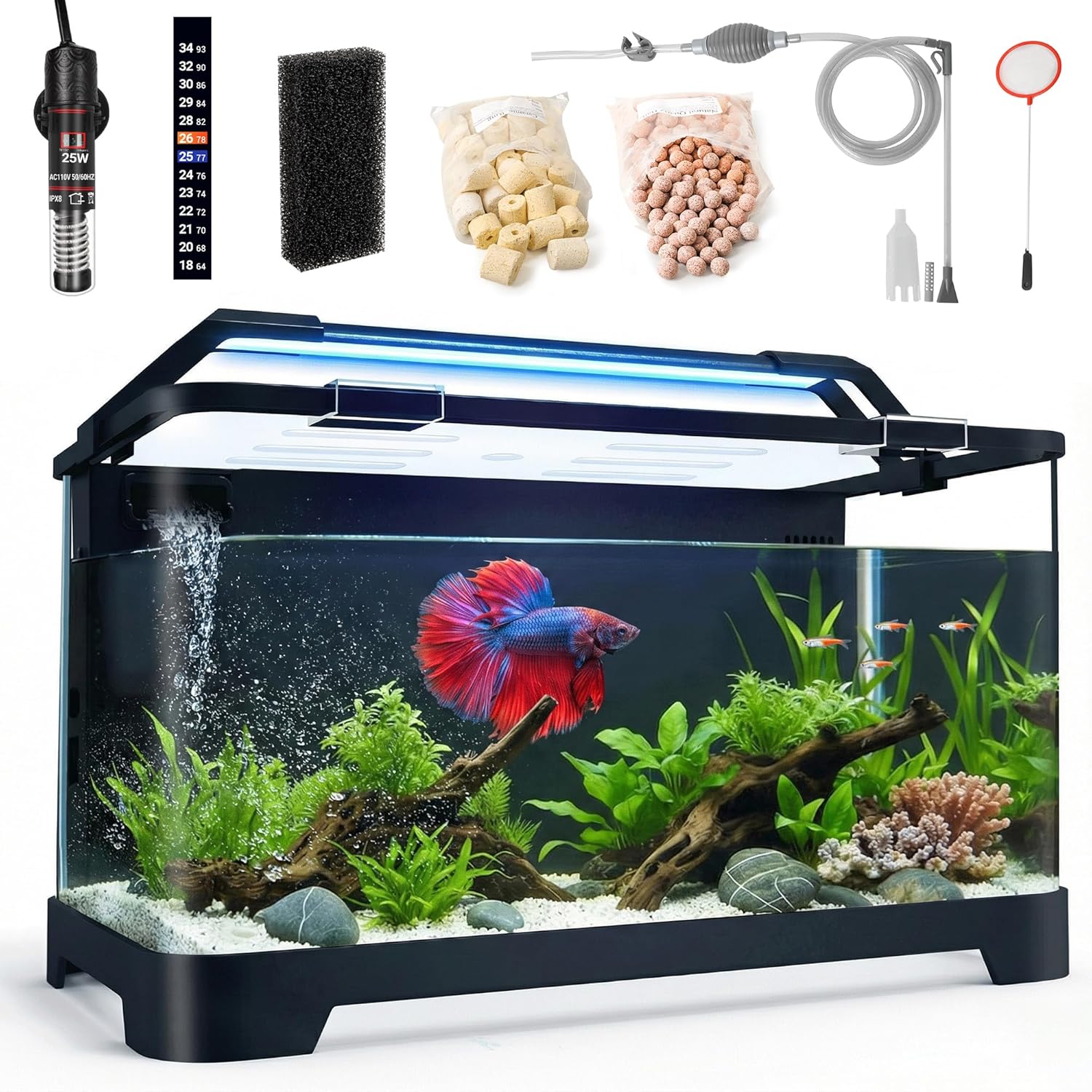
Setting up a TopFin aquarium takes 30–45 minutes and requires no tools or prior experience. The process is the same for all TopFin kit sizes (5, 10, 20, and 29 gallon): choose a location, rinse components, add substrate, fill with dechlorinated water, install the filter and heater, add water conditioner, and run the system for at least 24 hours before adding fish. Ideally, run the tank for 4–6 weeks to cycle properly before introducing livestock.
What You’ll Need
Everything in the TopFin Tanks starter kit, plus the following items you’ll need to purchase separately:
- Aquarium substrate (gravel, sand, or planted substrate) — approximately 1–2 pounds per gallon
- Water conditioner (a full-size bottle; the sample packet covers initial setup only)
- An aquarium test kit (liquid tests like API Master Test Kit are more accurate than strips)
- Decorations, rocks, or driftwood (optional but recommended)
- A bucket dedicated to aquarium use only (never one that’s held soap or chemicals)
Step-by-Step Setup
Step 1: Choose the right location. Place the tank on a flat, level surface that can support the filled weight (a filled 10-gallon tank weighs about 110 pounds; a 29-gallon weighs about 330 pounds). Avoid direct sunlight — it promotes algae growth. Position near a power outlet for the filter, heater, and light. Never place on carpet without a solid platform underneath.
Step 2: Rinse the tank. Wipe the inside of the glass with a clean, damp cloth. Never use soap, detergent, or glass cleaner — chemical residues are lethal to fish.
Step 3: Rinse the substrate. Place gravel or sand in a bucket and run water through it, stirring and draining until the water runs clear. Unrinsed substrate causes cloudy water that can take days to settle.
Step 4: Add substrate to the tank. Spread the rinsed substrate evenly across the bottom to a depth of 1.5–2 inches. For a natural look, slope it slightly higher toward the back.
Step 5: Place decorations and hardscape. Add rocks, driftwood, and decorations before filling with water. This prevents splashing and lets you arrange the layout while the tank is easy to reach into.
Step 6: Fill with water. Place a clean plate or plastic bag on top of the substrate. Pour water slowly onto the plate — this prevents the stream from disturbing your substrate and creating a mess. Fill to approximately 80% capacity.
Step 7: Add water conditioner. Add the appropriate dose of water conditioner (follow the bottle’s instructions for your tank size). Water conditioner neutralises chlorine and chloramine in tap water, which are toxic to fish.
Step 8: Install the filter. Hang the TopFin filter on the rear wall of the tank. The intake tube should be fully submerged. Insert the filter cartridge. No tools are needed — it clips directly onto the tank rim.
Step 9: Install the heater. Position the heater vertically or horizontally along the rear glass, near the filter outflow for best heat distribution. Use the included suction cups. Set to your target temperature. Wait 15 minutes for the glass to equalise before plugging in.
Step 10: Top off the water. Fill the tank to the recommended water line (usually 1–2 inches below the rim). Add the beneficial bacteria starter sample.
Step 11: Turn everything on. Plug in the filter, heater, and light. Verify the filter is flowing, the heater indicator light activates, and the light illuminates the tank.
Step 12: Wait before adding fish. Run the tank for a minimum of 24 hours. Ideally, run it for 4–6 weeks to allow the nitrogen cycle to establish (see our How to Cycle a New Tank guide). Adding fish to an uncycled tank is the number one cause of fish death in new aquariums.
Setup FAQ
How long does setup take? Physical setup takes 30–45 minutes. However, the tank should run without fish for at least 24 hours (ideally 4–6 weeks for proper cycling) before adding livestock.
Can I add fish on the same day? Technically possible, but not recommended. An uncycled tank has no beneficial bacteria to process fish waste, leading to toxic ammonia buildup. If you must add fish immediately, start with only 1–2 very hardy fish and monitor ammonia levels daily with a test kit.
My water is cloudy after setup — is that normal? Yes. New tanks often experience a bacterial bloom (milky white cloudiness) in the first 1–2 weeks. This is harmless and resolves on its own as the biological filter matures. Do not perform large water changes to try to clear it — you’ll slow down the cycling process.
Do I need to wash the filter cartridge before using it? No. Use the filter cartridge straight out of the packaging. Rinsing it can wash away some of the activated carbon coating.