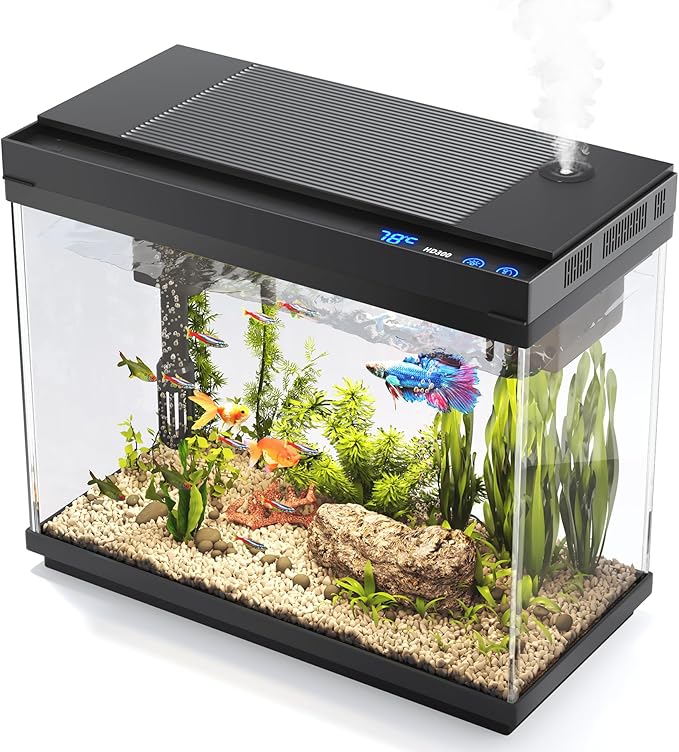
Cycling an aquarium means growing colonies of beneficial bacteria that convert toxic ammonia (from fish waste) into less-harmful nitrate. A full cycle takes 4–6 weeks. The process involves adding an ammonia source to a fishless tank, running the filter continuously, and testing water weekly until ammonia and nitrite both read 0 ppm while nitrate shows a slight rise. At that point, the tank is safe for fish. Skipping the cycle is the number one cause of fish death in new aquariums.
What Is the Nitrogen Cycle?
Every fish produces ammonia through its waste, gill function, and uneaten food decomposition. Ammonia is highly toxic to fish — even low concentrations (above 0.25 ppm) cause gill damage, stress, disease, and death.
In nature, two types of beneficial bacteria process this ammonia:
Nitrosomonas bacteria convert ammonia (NH₃) into nitrite (NO₂⁻). Nitrite is still toxic to fish.
Nitrobacter bacteria convert nitrite (NO₂⁻) into nitrate (NO₃⁻). Nitrate is much less toxic and is removed through regular water changes and absorbed by live plants.
These bacteria don’t exist in a brand-new tank. They need time to colonise the filter media, substrate, and glass surfaces. “Cycling” is the process of growing these colonies before adding fish.
How to Cycle Your TopFin Aquarium (Fishless Method)
Week 0 — Setup: Set up the Aquarium completely (filter running, heater set to 78–80°F). Add the beneficial bacteria starter included in your TopFin kit. Add pure ammonia (available at hardware stores — use the kind with no surfactants, fragrances, or dyes) until a test kit reads 2–4 ppm ammonia. If you don’t have liquid ammonia, drop a small pinch of fish food in daily — it decomposes into ammonia.
Week 1–2: Test ammonia daily. It may stay high or slowly begin to drop. This is normal — Nitrosomonas bacteria are slowly colonising. Keep the filter running 24/7. Do not do water changes during cycling.
Week 2–3: You should begin to see nitrite appear on your test kit. This means the first bacterial colony is establishing. Ammonia levels may start dropping. Nitrite will rise — often to very high levels (5+ ppm). This is expected.
Week 3–5: Nitrite levels will peak and then begin to fall as Nitrobacter colonies grow. Nitrate will start appearing on your test. Keep adding ammonia to feed the bacteria — they need a food source to grow.
Week 4–6 — Cycle complete: When you can add 2 ppm ammonia and see it fully processed (ammonia = 0, nitrite = 0, nitrate present) within 24 hours, the cycle is complete. Perform a large water change (50–75%) to reduce nitrate levels before adding fish.
How to Tell If Your Tank Is Cycled
Your tank is fully cycled when ALL THREE of these conditions are met simultaneously:
- Ammonia reads 0 ppm
- Nitrite reads 0 ppm
- Nitrate shows a reading above 0 ppm (typically 5–40 ppm)
If ammonia or nitrite is above 0, the cycle is not complete — even if it’s close. Be patient.
How to Speed Up Cycling
- Use the bacteria starter included in your TopFin kit on day one
- Squeeze established filter media from a friend’s healthy tank into your new filter — this seeds your filter with live bacteria
- Keep the temperature at 78–82°F — bacteria multiply faster in warmer water
- Never turn off the filter during cycling — even overnight. The bacteria need continuous oxygenated water flow to survive
- Add live plants — they absorb ammonia directly and provide additional surface area for bacterial colonisation
Cycling FAQ
Can I cycle with fish in the tank? Yes, but it’s stressful and risky for the fish. “Fish-in cycling” means the fish produce the ammonia, but they’re also living in it while bacterial colonies grow. If you fish-in cycle, add only 1–2 very hardy fish (like danios), test ammonia daily, and perform 25% water changes whenever ammonia exceeds 0.5 ppm. The fishless method is safer and recommended.
My ammonia won’t drop — what’s wrong? If ammonia stays high after 2 weeks, verify that your filter is actually running and that the water temperature is in the 76–82°F range. Cold water slows bacterial growth significantly. Also check that you haven’t accidentally been replacing the filter cartridge — the cartridge houses your growing bacterial colony.
Does “instant cycle” bacteria actually work? Bottled bacteria products (like the sample included in TopFin kits) can significantly speed up the process but rarely produce a truly instant cycle. Expect them to cut cycling time from 6 weeks to 2–3 weeks in most cases. They work best in combination with the fishless ammonia method.
Do I need to cycle if I’m only keeping a betta? Yes. All fish produce ammonia, including bettas. An uncycled tank will cause ammonia burns, fin rot, and stress in a betta just as it would in any other fish. The cycling process is identical regardless of which fish you plan to keep.